
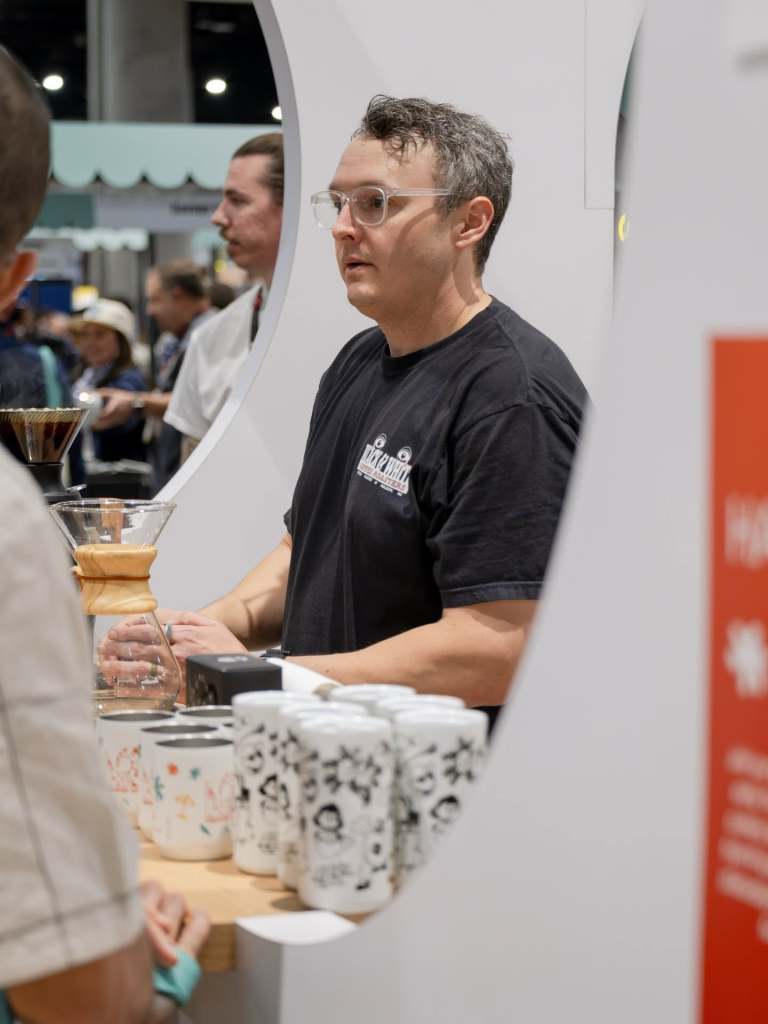
This past spring I had the chance to spend a great deal of time at the Created Co. booth at the World of Coffee event in San Diego. Throughout the day various roasters would pop-up, brew some exceptional coffee and share their story. It was there that I got to connect more closely with Kyle Ramage. Hearing his heart for the specialty coffee community and what he was seeking to contribute through his work at Black & White Coffee Roasters really impressed me.
So I reached out again a little while back, shared a bit of what I do here on this blog, and I was thrilled that Kyle was willing to connect up, and entrust to me, sharing his story! So let’s get right at it. Here’s my latest interview for our November Coffee Roaster of the Month–none other than Black & White Coffee Roasters!
So great to get the chance to connect with you Kyle! Help our audience get to know you a bit better… What’s your personal backstory in coffee? How did you get started? What keeps you going in coffee?
I started in coffee back when I was in high school, working a little shop in Mississippi where I grew up that served donuts and had sandwiches and kind of like did barbecue on the weekends. It was a weird and quirky spot, but that’s where I started really drinking coffee and working in the coffee space. That place wasn’t “specialty” as we’d call it; it was more like somewhere between first wave and second wave.
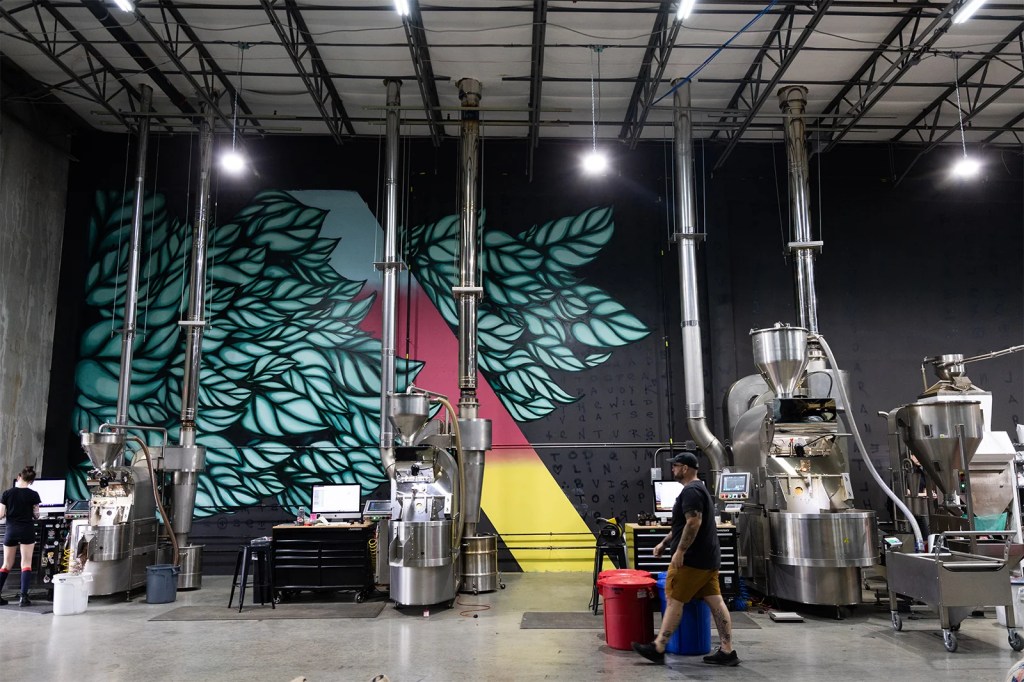
I moved to North Carolina in 2010 and ended up getting a job with Jubala Coffee in Raleigh right when it opened through a crazy series of events. I worked there for two and a half years. Then I ended up working for Mahlkönig USA, with Gary Horn and Travis Jones and that crew. I did that for quite a long time, and then got the opportunity through consulting on the side to purchase a roaster that already existed called Back Alley Coffee Roasters. I then you joined forces with Lem and the whole thing, you know nine years ago now, and started Black and White. That’s really how I got started.
What keeps me going is the never-ending flavor exploration. I keep finding new parts of the industry that I enjoy and appreciate. You know, I’ve worked in equipment and cafes and in roasting and sourcing, so all that stuff just you know it’s kind of a never-ending thing.
Before we go much further, share with our readers what you’re drinking/enjoying these days when it comes to coffee!
Hmm, that’s a great question. Every year, it’s always a little different. I do kind of have a set of flavors that I really prefer, as far as like when I’m drinking coffee, when it’s for just pure enjoyment.
I’m quite a varied coffee consumer, which might seem obvious with Black and White’s menu, but I really enjoy flavor in general. So, I like creating and molding and making these “The Future” blends. So those are a lot of fun when I can like work with different components to create a flavor profile that gives someone like an emotive response. It’s really special for me.
But like my favorite would be washed Ethiopia. I just drink a lot of washed Ethiopian coffee. I just really love it, really care for it. Floral, sweet, easy to drink. So that transitions very easily into geisha, which is kind of what has made Black and White so special in competitions and whatnot.
My favorite profile of that proof of concept is high fermentation washed and honeys, which is what I prefer to drink the most like the cleaner honeys that have like a little bit a little bit of funk. I always want a little bit of funk on there, a little bit of interesting thing. I want something that’s like a little bolted on fermentation.
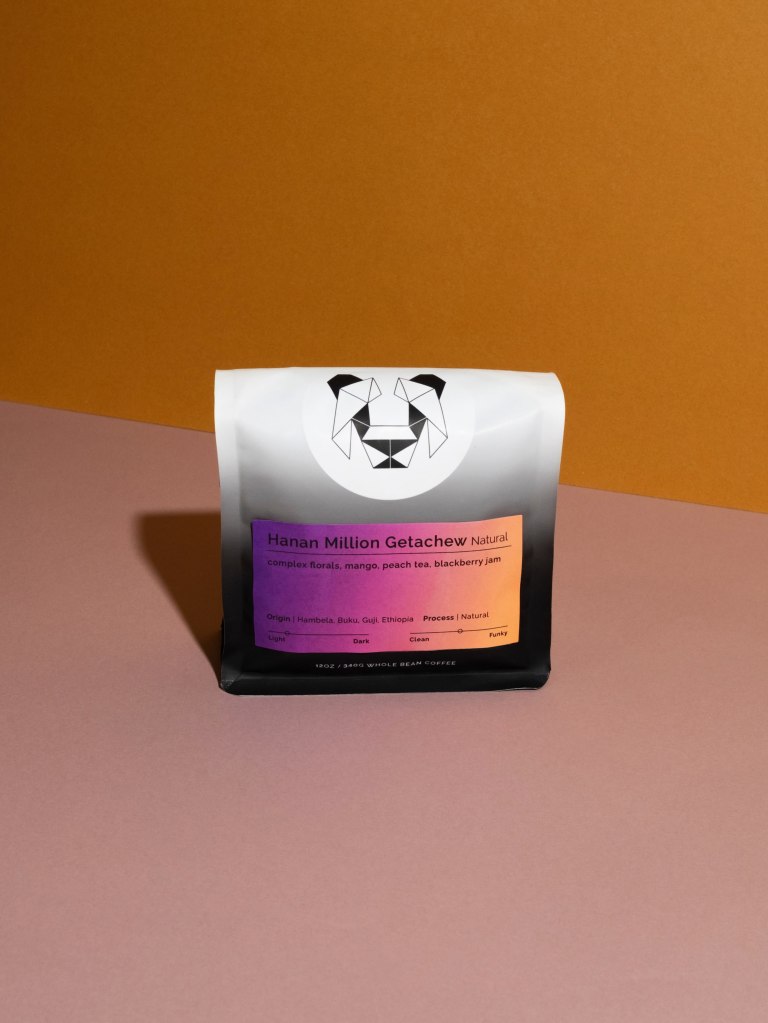
Usually this is what I want to experience. Those profiles are not that common these days, but I do prefer them. That’s my favorite thing to drink, as it goes. What I’m enjoying right now on our menu is Hanan Million Getachew, just traditional natural geisha. Guji is having a year this year, and wow, the coffees from Guji this year are just spectacular.
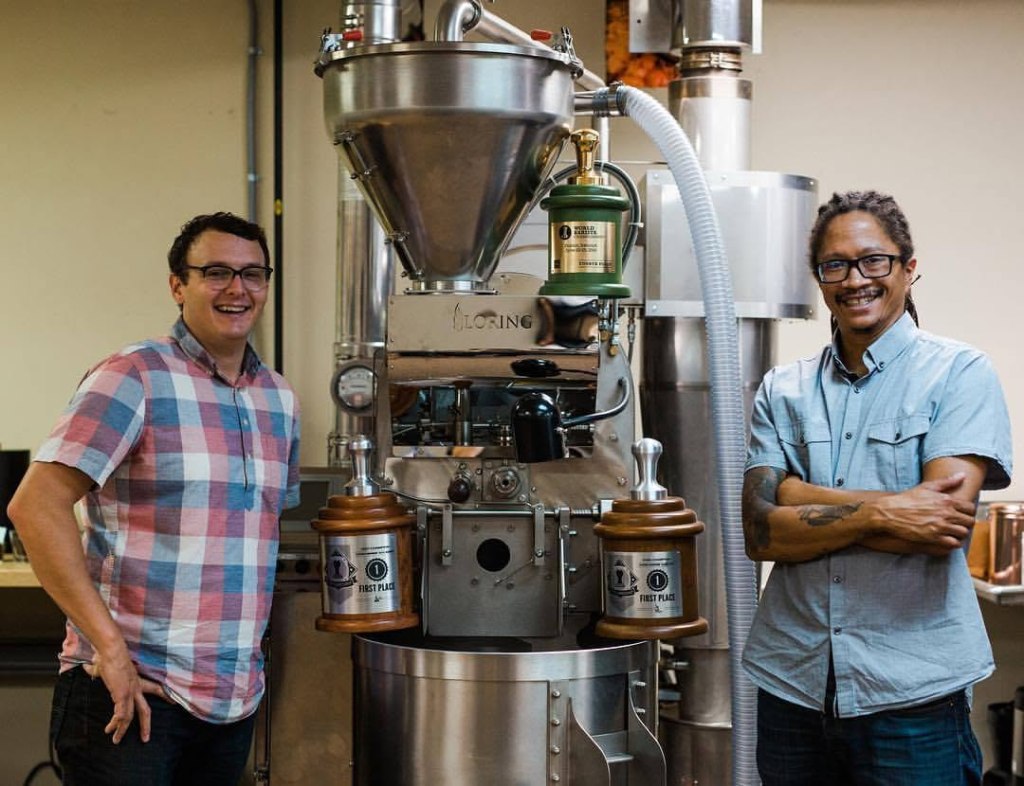
I am always fascinated in the origin story of how a roaster selects their name, so help our readers to get to know the story behind the choice of yours. You began back in 2017 with yourself and Lem Butler. What made you decided to go into business together? What were you hoping to achieve?
So yeah, the name Black and White kind of comes out of the kind of the name kind of comes out of the competition scene and what we were doing at the time. The name kind of originated back in 2016 when we were working on Lem’s run-up to Worlds in Dublin, and so we were kind of chatting back and forth like what’s your ideal cafe? What’s your ideal cafe?
Lem’s version was this all-white cafe that was a kind of soda-jerk style. Everyone wore all white, just imagine those daydreamy old school soda fountain vibes. And then I kind of always liked the darker esthetic idea for a cafe. I liked the black counters, black machines, everything to kind of hide, and the only thing that you see is the is the coffee machine.
So that was kind of our thing. That’s kind of where the original emphasis of the idea came from. Lem wanted an all-white café. I wanted an all-black cafe. I was like, what if we did both? And part of the bar is white, part of the bar is black, and that were the original silly, thoughts that come to your head when you’re you know daydreaming a business idea.
And then I said, “why don’t we just name it that?” And then we were off to the races at that point. It’s pretty fun how that story has grown, we’re “Black and White Coffee” and nothing’s Black and White at all. That’s the reality of the world we live in, and so we sneak that into a couple random places all around the roastery and around in coffee promotion bags and different stuff like that too.
Given that both yourself and Lem achieved significant success on the US Barista Championship & World Barista Championship Stage, how did those experiences help shape the ethos of Black & White Coffee Roasters?
Yeah, competitions have always been very, very, very important to Black and White. Like literally, I’m preparing to go to the World Barista Championships right now. It’s in Panama this year, and so I’m excited to go and help the American competitor who doesn’t work with Black and White at all is just a friend of the family so to speak.
But that’s kind of been a part of the ethos for really really long time. Even before Black and White, that was something that was very important to me. I found it very interesting to see people at that level. I had the chance to be at competitions when I worked for Mahlkönig, even having the opportunity to be the technician in charge of the World Barista Championship grinders etc for the 2015 World Barista Championship in Seattle when Sasha won. So yeah, it’s been it’s been a really big part of who I am what I love to do.
And after being that technician for that event, it really sparked a ton of really fruitful relationships with Sasha and their team, with Maxwell Colonna-Dashwood and their team, with Kyle Frese from Sweden. There’s just so many people that I really got involved with and that really shaped the way I think about coffee through these competitions.
Definitely at that time, it’s kind of before social media’s great rise and WhatsApp and stuff like that became so popular, but that was really where all the information lived. It was all these people who just collected it, and shared it. Oh yeah, and Ben Put and that crew too. That was a huge thing for me, like meeting and hanging out with Ben for the first time at the world level, who’s always been a huge inspiration to me by Ben Put at Monogram Coffee and Jill, who’s competing this year in Panama. So yeah, these people are a part of my life and have been a part of my life for a very long time.
Relationships last longer than competition, longer than any like functional relationship would. It’s not just that, but it’s like a mutual inspiration, I think, is how these competitions continue to live on and be special.
There are just so many friendships that you end up making at these events, because a lot of a lot of your high-level coffee producers will be at this show. I’m always excited to go and just see producers, brew coffee with producers, meet producers, who are doing new and cool stuff in and around the world. You know, we talk about being on the bleeding edge of what’s possible with coffee flavor, and these are the people who are on that bleeding edge. Whether it’s like really purists, like Panama, really focusing on variety and terroir, or it’s processing, like really Colombia is focused on right now, or it’s some hybrid of those things that’s happening kind of everywhere else in the world. It’s a pretty fun time to be a coffee buyer.
It’s also a very fun time to be a coffee drinker. I think coffee is honestly and for all intents and purposes significantly better than it ever has been in the world. Sadly, it’s not that much cheaper. It definitely was cheaper a few years ago, but I mean that’s the beauty of it. As we as we continue to create a market for coffee, we’re going to continue to create a value system for coffee, and then have a value system where producers can actually monetize their real value in the marketplace, which is which is huge. That’s a great thing. So don’t let that be discounted.
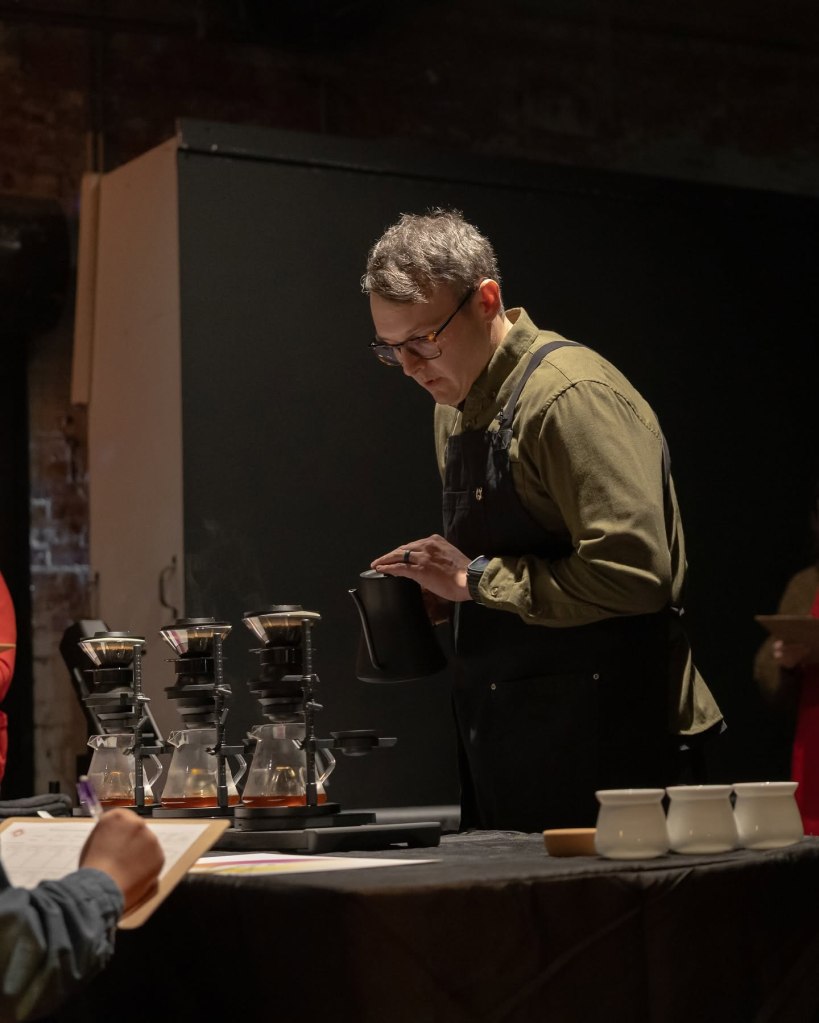
Staying on that topic for another moment, can you reflect back on your days competing on the USBC & WBC stage, and share with our readers how these experiences shaped you personally, and why—for those considering competing—should they consider getting involved in the competition space?
Well, I think I elaborated on that actually quite a bit in question four. It’s a beautifully inspiring space for people who are like fully bought into the thing. I want to see people succeed; I want to see people become successful.
When it comes to the competition space though, there’s a challenging thing to think about between two realities, that I see. There are those who have a purist aim where they may say “oh I want to be the best in the world, and just like serve the best coffee and do the coolest stuff in the world”, but the reality is you have to kind of balance that with being a commercial success at the same time.
That’s like where I don’t think a lot of people talk. Talk a lot about the beauty and like kind of wax poetic about competition and these amazing coffees they get to score in cup and serve, which is amazing. I love that as much as anybody. I don’t think there’s many people in the world who spend more on coffee at volume than Black and White does.
There is certainly a balance between the beautifully pure and authentic expression of what you want to see in coffee that comes from the competition space, and then also balancing that with the business acumen to create value for your company or for yourself or whatever that might be. So, I think the competitions are an incredible vehicle to do that. They’ve proven to be that, at least in the past. It was like it’s just a great tool to use to accelerate your career in the coffee space, and that’s the that’s the play that Lem and I played.
The competition space is a great tool to accelerate that career and to make something viable for yourself. And then you know, as you make something viable for yourself, you bring other people along with you, your staff, your teammates, whatever you however you want to talk about your kind of clan that you create.
And then at the same time, if you really get moving volume, then you can start bringing along producing partners with you along the way, right? That’s how I think about it, anyway. Is a means to an end to help the global system and help producers actualize value. That’s my end goal at the end of everything. I want to see myself actualize value. I want to see our team actualize value, and I want to see producers actualize value. Not necessarily in that order, but you have to kind of do it in that order. My desires are not in that order, but my you have to do it in that order in order to make the whole system work. Right? It’s a big system. It’s not a small system, so it’s tricky. I hope I hope it’s coming across what I’m trying to say. But the economy of scale thing is really really important.
Your site shared three core values: Service, Community, and Excellence. How have you sought to live those out over the past 9 years as a company?
Oh, of course, yes. And they’re in that order for a very clear and poignant reason. That was something that was one of the first things we put together as a company. Now we actually have a new a new kind of mission statement, but I’ll share that at the very end.
Service is huge. How we show up for people in and around our community is important. How we show up for our customers is really important. How we show up for the people in our house is very very very important. Taking the opportunity to train someone up from within rather than to go hire outside is huge. We do both, honestly, but I greatly prefer to keep staff within. That’s our marketing department. That’s our CX department. That’s our tech department. That’s our now. I guess even, now that Matt’s been here forever, so that was kind of our roasting department as well, production staff, production leaders, managers. We really try to keep people in the system and then let them work up the chain.
And community is wherever we are. Community does not just like who lives here in Raleigh or who lives in Wake-Forest or you know who lives wherever. This is like the people that we’re interacting with. So that can be community in like the small sense, like the kind of township sense, or in the coffee community space, or in the kind of producing partner space. Those are very, very, very important. We try to have as much open and honest communication with producing partners as is feasible as is real. It’s much easier now with WhatsApp and Facebook Messenger and Instagram Messenger and stuff like that. But that’s really, really, really important.
And lastly, excellence. We want to provide the highest level best thing we can possibly provide for the best value that we can possibly provide in the world. That’s a mark of just the way we want to do things. We want to do things. We set our own bar for quality and for what we want to see in the space. We want what we want to see for customer service. What we want to see for cafes. Do we fail sometimes at all three of these? Oh, absolutely. But you know, we’re always trying to make new mistakes and not repeat errors, especially errors that hurt people. Sadly, that is a reality of the human condition. We do things that hurt other people sometimes, but owning those things and moving forward to right those wrongs is always the goal. Definitely, I definitely have not lived a perfect life and will never attest to that. But always trying to be a better version of myself year after year. It’s hard to do.
As you approach your 10th anniversary next year what would you say are the top 3 lesson’s you’ve learned from this past decade? And what would be three goals you’d love to achieve in the next 10 years?
That’s quite the question there. Something that we’ve recently put together is kind of a new guiding mission statement, and that mission statement is “Make it better, have fun.” That’s what we want Black and White to be about. We want to be a group of people who make every situation we walk into better, and we want to have a good time on the way.
Because, being better for the sake of being better is cool. But, if we’re not having a good time with it, it’s not a sustainable practice, right? I’ve been in this industry for quite a long time now. You know, since 2010, I guess, is when I really started in specialty.
We’re staring down 16 years of this stuff, and so the only way that you can really keep this thing going is to have a good time and be curious. I think you could say those are the three lessons. Do something you can enjoy. Do something you can do for a long time. Have fun. Everybody does stuff they hate. That’s true. Every job has some part of it that’s not fun, but find the good stuff. Celebrate the good stuff. Celebrate the good people. That’s huge.
A lesson I’ve learned is people need specific kinds of encouragement. Some like a little bit more of a firm leader. Some like a little bit more of a soft leader. Some like more guidance. I’m a pretty hands-off manager.
But believe in the team, be curious, support your people. Yeah, I think that’s it. I think that’s I think that’s the only way you can keep these businesses successful for a long time. Done a lot of studying through CEO of WD 40. Go read, gosh, the guy who owned 11 Madison Park, the book is called Unreasonable Hospitality. I mean, what a true and interesting way of thinking and owning some mistakes and working through good ideas and bad ideas, I think that’s cool.
Looking at your distribution map, I think that Calgary is the only Canadian city that offers your coffee (via Eight Ounce Coffee). Lucky for me that’s my home city. Do you hope to expand your reach further into Canada in the future?
Calgary, man, what a place! What a city! That’s honestly probably the city that’s inspired me the most, which is nuts, right?
So, when I was kind of coming up in coffee, I went to the Canadian National Barista Championship in 2015, It was Vancouver. Ben Put was there and Josh Hockin was there back when he was with Transcend, and then of course you know the guys from Rosso Coffee too. I didn’t know them quite as well but later I met Cole that next year in Amsterdam that was cool we got we got always gotten along really well. I’ve tasted coffee with Cole a million times, and then of course Phil and Sebastian have always been such a huge part of the way.
Man, Calgary is such a cool city doing so much cool coffee stuff. The quality coffee per capita there has to be insane. Raleigh, where I live, is a great city. We have us, we have counterculture. We have another couple small roasters in Durham. We have Little Waves, and a few others. Little Waves is crushing it and doing really cool stuff, as well as you know a myriad of smaller cooler roasters too who are coming up, people from inside our system doing home roasting and it’s so cool. But and so many great cafes here.
But I mean, compared to Calgary, I mean y’all have some of the top 20 roasters in the country all in one city, which is so sick. We definitely don’t have that. Oh, getting into Canada is so tough, brother. Oh man. I think everyone’s pretty aware of our current political situation. So I’m hoping that once that gets all sorted out, then it should be a little easier to get into Canada. It’s tough too. The currency fluctuation is really, really tricky. And again, y’all just have so many great roasters in Canada.
Funny enough, there there’s a huge number of American companies who are buying coffee from Calgary and shipping it to North Carolina or shipping it to California or Seattle or whatever. I’ve never even been to Calgary. It’s one of those things where I’ve always wanted to, but I end up doing this thing where like the competitor I’m coaching or helping with is competing against whoever Ben’s competing, or Ben’s competing, or Jill, or you know the roaster guys or whatever. I hope to get up there soon though. What a cool town! Inspiring for me for sure.
Speaking of your coffee, can you share a bit of your sourcing and roasting philosophy. You often have so many unique, rare, and funky offerings! What are the most important values/objectives for you when sourcing coffee? What about when roasting coffee?
Definitely. Wow, coffee for me is such a huge flavor window. I think that’s what probably differentiates us from a lot of roasters, is that our window for quality is big, not necessarily like our score, but like what flavors can work for us are different than what flavors can work for other people.
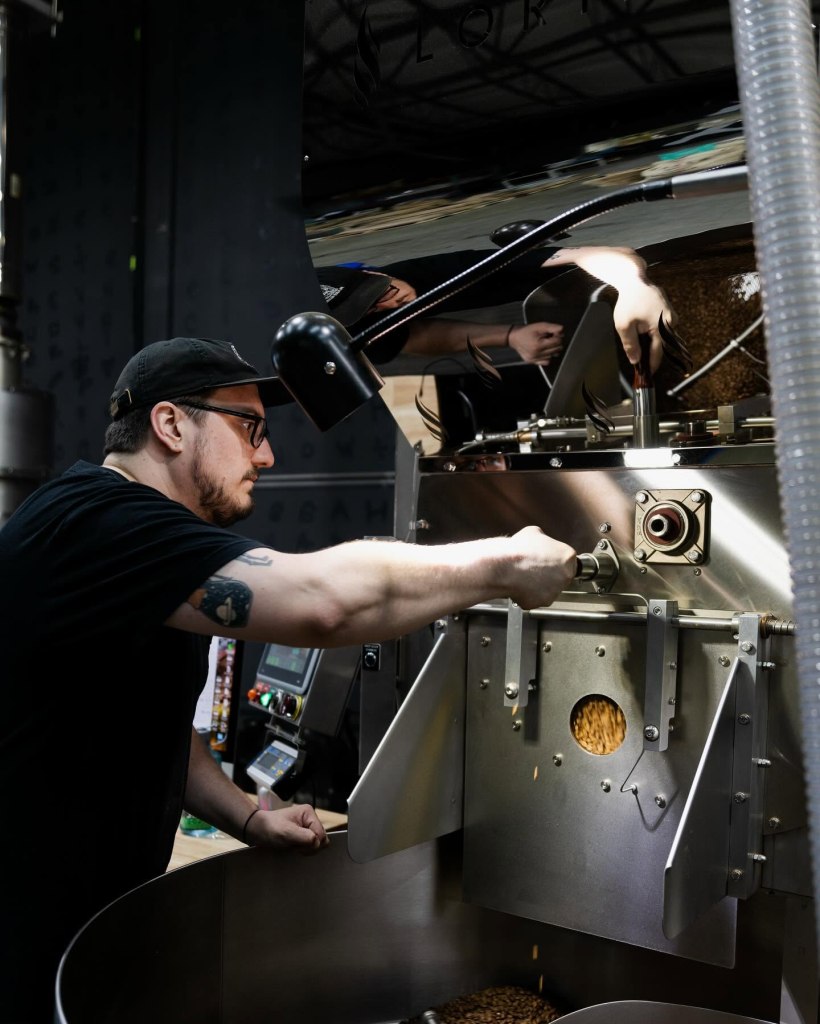
We’ve kind of gotten the mark of a funky coffee roastery, which is totally fine. We do a lot of that stuff, and we’re quite good at it. But I mean, our rejection rate on co-ferments is I don’t know, 85 to 90% rejection rate. We’re very, very, very particular about what we buy and how we buy them, and then how we roast them changes with every batch.
Some of these coffees are just very very loud, which makes them hard to drink. Honestly, like a whole cup of them. So you’ve got to really be careful, have a careful touch with how you roast them and all the while creating products that evoke excitement. That’s kind of one of the things that I really like about coffee sourcing right now. It’s such a fun time to do it, and there’s so many great producers doing so much cool stuff around the world. Again, focusing on totally different stuff, But yeah, we’re always trying to find not necessarily new profiles, but better and better execution of profiles that we’ve loved in the past.
Like clean, washed Ethiopians, clean, washed Pink Bourbon’s from Colombia, clean, washed Geisha from Panama and Colombia, and other expressions of varieties all around the world. Those are always fun, and memorable. But then seeing what producers can create with their own profiles and techniques and for how they want to ferment and control and move coffees around the world. It’s been really, really, really fun.
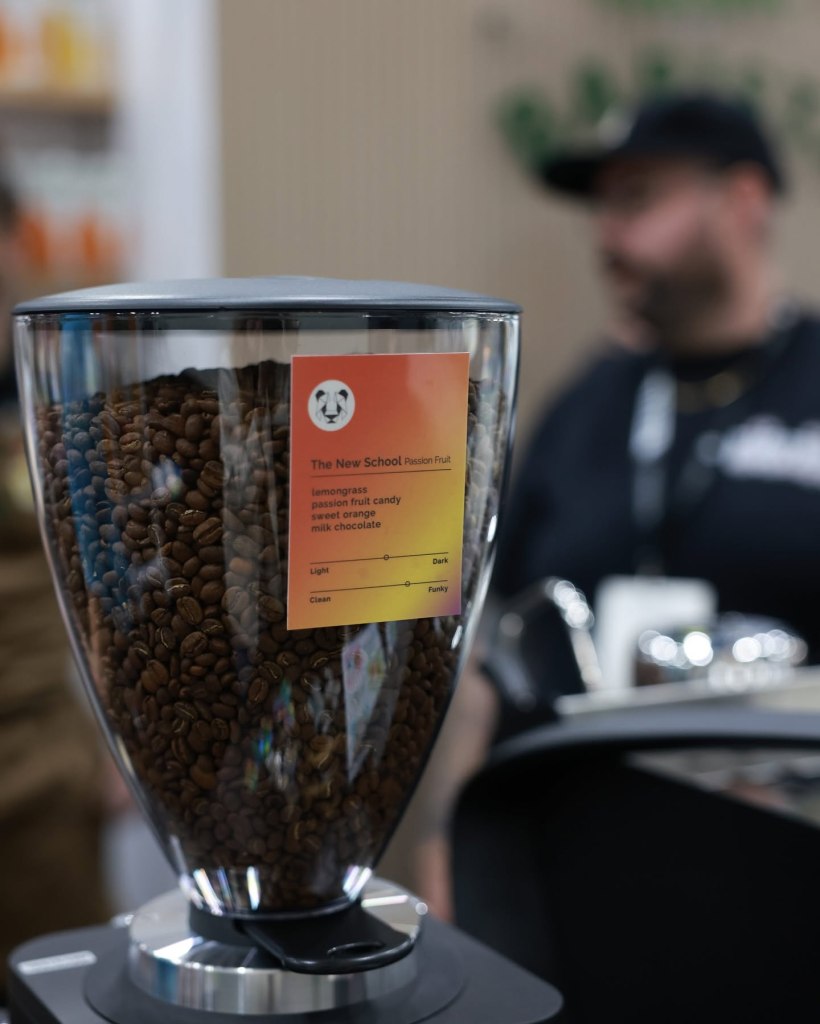
I think the easiest way to think about this would be to think about it, like a flavor playground on our website, where you can like buy some of the most interesting and eclectic coffees from all over the world. Whether it’s like you know, clean wash coffee from Colombia or Honduras, or Ethiopia, or Mexico, or wherever, but also like naturals from similar places, and then excellent, excellent, and excellent versions of those things.
That’s the beauty of working at the scale we’re at now. You know, as we do this thing, we take on more and more risk, which is fine. I don’t mind risk at all, but thankfully we have mechanisms within our system to utilize coffees that may come in and not quite hit the quality we want to. I mean, there’s great producers, world-class producers. Occasionally coffee doesn’t travel well, or it doesn’t store well, or the vac-seals broke, or who knows what it could be. Water acidity is a little wonk, or whatever. Still a natural product. It happens. So, we’re always trying to source and roast the most compelling coffees in the world that are easy to extract and easy to brew at home, in the cafe, in at the World Barista Championship stage, whatever. It’s really fun to get to serve coffees across a pretty huge swath of that stuff. One thing is really interesting, and I think this is part of the philosophy. I don’t want to give away the lead, and maybe my secret sauce. But I don’t think anyone’s really going to be able to. I hope people can do stuff with it because you know more people that sell great coffee in the marketplace, the better the marketplace gets, the more knowledgeable the marketplace gets.
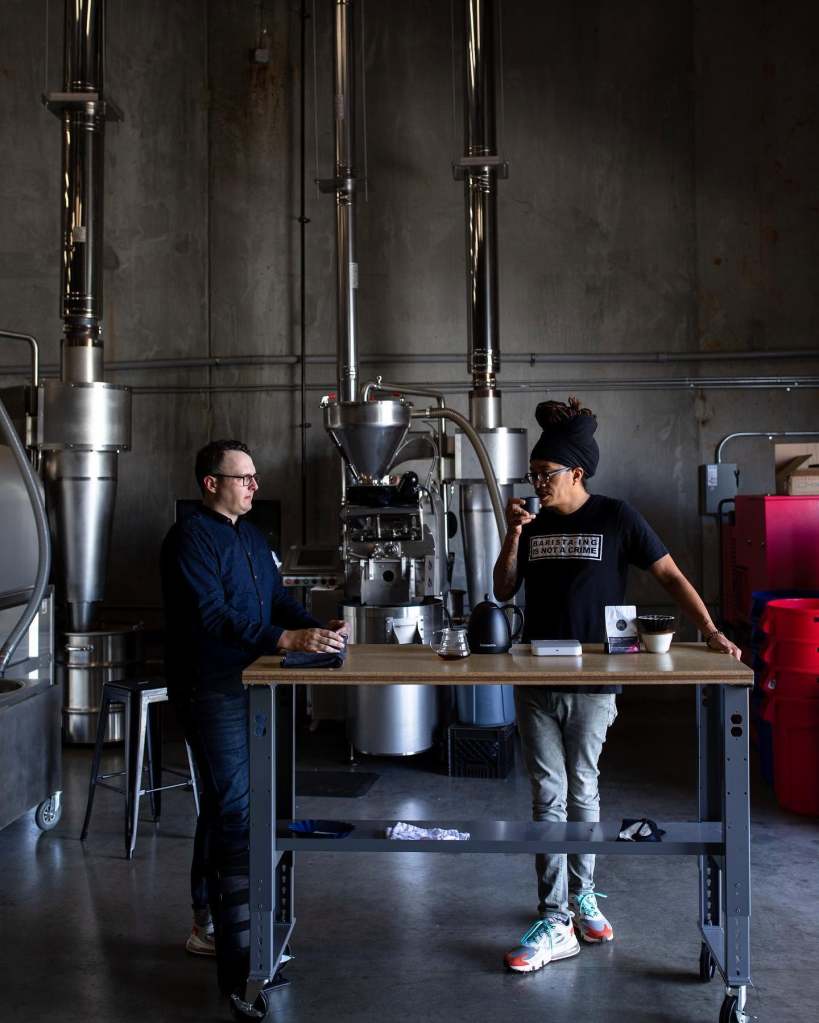
Thanks so much for sharing your story! Here’s your chance to say anything else you want to. Go for it. Is there anything else our readers need to know?
That’s a great, great question. I said a lot. I said a whole lot. I have a lot of thoughts about different things. Oh, one thing that I found fascinating. I was really going to speak about in nine. That’s kind of influenced our roasting style a bit. Is that like okay? So before COVID, right? That’s kind of when I came up in coffee. During that time, the best place to get coffee in any given city was you know whatever cafe that was that was killing at the time, right? Like you know Silver Lake Intelligentsia, Monogram (Calgary), Revolver (Vancouver), all these crazy cool cafes all around the country. That was the place to go to get the best coffee in the world at any given time. They had the best equipment. They had the best coffee. They had the best water. You know all that stuff, right? Best staff, best baristas, but we’ve noticed a dramatic shift since COVID.
So, during COVID, especially in the USA, like all the cafes kind of shut down, and so like if they could get them to be like takeaway services, it was different. It was a different experience in the cafe. No more sitting down doing flights and cool stuff like that, right? So during that time, our e-commerce grew, you know, dramatically. Direct to consumer became a huge part of our business, and we always expected it to go back down and for us to become a wholesale roaster again, being mostly most of our coffee going out the door for wholesale partners. And then, you know, after COVID, the home customers just never went away. They’re still there, and so I was like, okay, cool.
And so, then we get to think and notice and become friends with a lot of these like home enthusiasts and come to realize that the reality from before COVID of the best cafe having the best coffee in the in the city or whatever, is likely not true anymore. Likely the best coffee is at some person’s house in whatever random city, who has all this cool gear and all this time to prepare and you know rest the coffees really perfectly and freezes them or whatever else, and uses all the techniques and all the special tools and gadgets.
You know, an espresso doesn’t take just 30 seconds to make; it takes three to six minutes to make. You know, more like a pour over technique in terms of time. So I think that is that’s one thing I’ve come to notice is that the that the leaders of flavor choices in the marketplace have really democratized now, which is really interesting.
Where like the groups on Reddit and those kind of board groups, you know, whatever they have, like the the internet groups, those are where you’re seeing a lot of the thought leaders emerge, and it’s not like one thought leader, though guys like Lance Hedrick have a huge impact on that on that scene.
I’m seeing a lot of this movement in the home market being where we’re seeing a lot more acceleration of technique, acceleration of flavor profiles, and these soup shots, and all this like low pressure stuff, you’re seeing all that. That’s where the kind of new cool stuff is really happening, and they’re kind of leading the market as far as like who’s serving the best coffee in the world. It’s probably that random apartment that has the best coffee in in the city. It’s not my house, sadly. I do a decent job at home, but I don’t take that kind of time. So it’s really fascinating time to be a coffee roaster and to be a coffee sourcer. And we definitely are thinking about these people, but not letting them drive what we offer and serve. Just doing the things that we think are interesting and fun. I don’t think customers particularly want to make all the choices.
_________________________________________
Contact Info:
web: www.blackwhiteroasters.com
instagram: @blackwhiteroasters
email: hello@blackwhiteroasters.com
Find their beans: If you’re looking to get your hands on some beans then definitely check out their web-store for what they’re currently roasting.
__________________________________________
I just wanted to say a huge thanks again to Kyle and the entire team at Black & White Coffee Roasters for being a huge contributor to the specialty coffee community–not only locally in Raleigh, NC–but on a global scale too! I am so glad to have the chance here to share their story.
Happy Brewing!
-Tyler

