

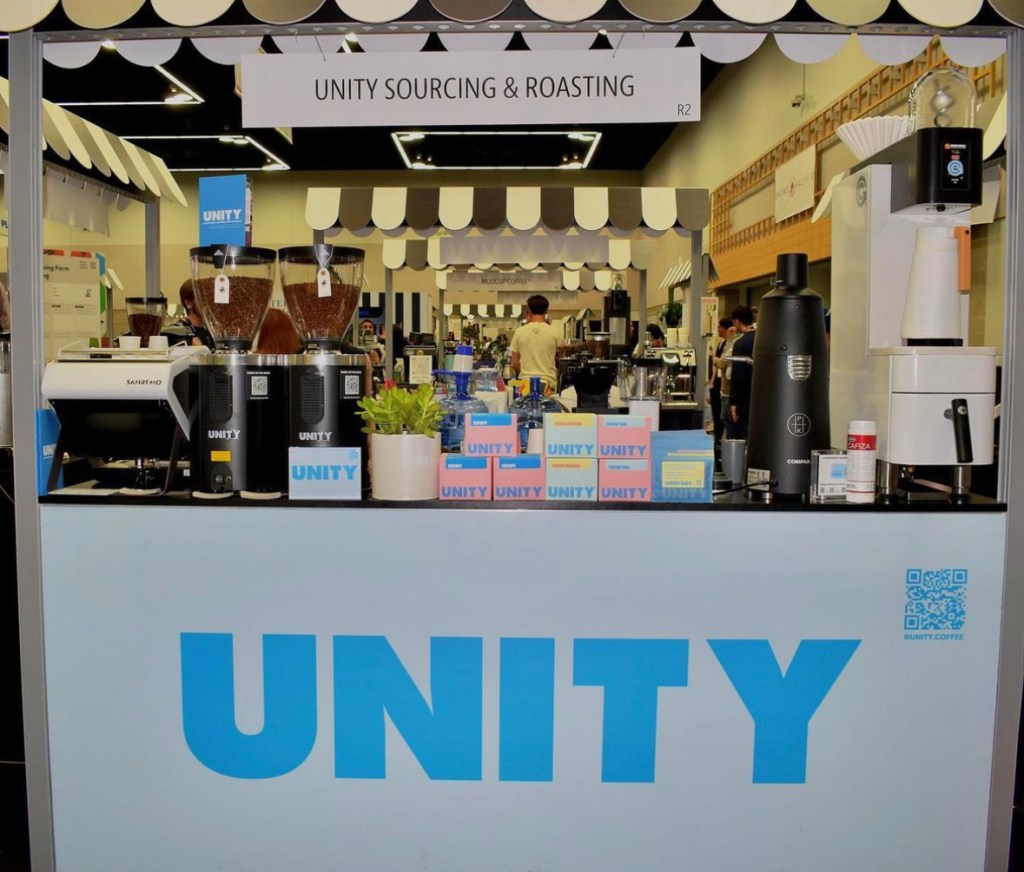
It was earlier this year that I first heard about Unity Coffee out of Los Angeles, California. Fast forward a few more months at EXPO in Portland I had the chance to run into Meagan (a former team member). We had a great conversation and she mentioned that Unity had a booth over in Roasters Village. I made sure to stop by to drink some coffee and it was incredible. The next day I had the fortuitous chance to brew one of their coffees along with my buddy Caleb at the Cafec Booth.
These types of opportunities are what I love, and it connects me on a deeper level with some great coffee roasters. I knew from these encounters that Unity was special, and a roaster I would want to one-day have the chance to share their story on my blog.
Well today is the day. And I am thrilled to have had the chance to chat with Adam Strauss (owner, roaster & green-buyer) to hear from him about Unity Coffee and to share their story as our August Coffee Roaster of the Month.

Hey Adam, so great to get the chance to connect with you! Help our audience get to know
you a bit better…what’s your backstory in coffee?
I’ve been in coffee since 2009, owned my own company since 2017. I was initially hesitant to work full time in coffee because I was just out of college and wanted to pursue studio engineering. I have been employed as a production assistant, sales person, barista, shop manager, trainer, roaster, green buyer, in addition to all the things a business owner does. Over time, coffee became a much deeper love than audio recording. Particularly, travelling overseas, which I had never done, really broadened my horizons as a citizen of earth. connecting with humans from different cultures drove me to work deeper and deeper in coffee.
So how did you get started?
My first job I was both somewhat resentful and grateful for, as I didn’t have intention to work in coffee, but was really broke and needed a job. Those were recession days, where shops were flooded with applicants and it was hard to get hired somewhere. I like to carry that drive and fighting spirit through my company, and give everyone a shot I possibly can, since it was so hard and slow for me to begin my career. I really took off when I worked for Pushcart in New York – the owner was really open minded and employee driven, which allowed me to flex most of the ideas I had in coffee.
What keeps you going in coffee?
My ideals. So many people lost them or never had them in the first place. Without my values I am nothing, as it is a very saturated market with much more powerful people than me. Pay producers more, know your coffee, put micro lots in your blends, pay more for female producers, etc. Domestically: support your employees, show up for marginalized communities, speak out against racism, always be a better person than you were yesterday. There’s no reason to be in coffee if you are not fully focused on your philosophy.
Can you tell us a bit about the history of Unity Coffee?
Tyler, Sean (silent partner now), and I were employees at Pushcart. We had a good working relationship for a few years before starting our own company. Like I said, the owner of Pushcart let us do a lot of cool things and was very open minded, a great boss. But there are still limits when someone else gets the final say. We wanted to take more risks. We wanted to pay even more for coffee, we wanted to travel to further origins, we wanted to buy more wild naturals. This was 2016, and way less people were into nattys, anaerobics, and co-ferments. I was laughed out of a lot of cupping tables. But now look, every homie has a wine yeasted banana Gesha.

How did you come up with the name?
We kicked around a lot of names. I honestly wanted something more silly, as I am a very serious person and wanted to find balance. Yet, we kept coming back to Unity, because we are all about inclusivity and connection. Connecting growers’ stories to consumers. In 2016/2017, the industry was making a well-needed shift from being pretentious and inaccessible to having more marginalized people in roles of power, less strict on cupping notes, and less gatekeeping with regards to traceability and transparency. Unity is all about all that.
So, your home-base is Los Angeles, CA Can you tell us a little bit more about what the specialty coffee community is like there? What do you love?
The vibe in the LA coffee community is generally a happy one. People are genuinely excited to do a tasting or see a barista friend or lose a throw-down. It’s that positive element that separates LA from other coffee communities I have noticed. It’s also very open minded – lots of people trying different things all over the map and there’s general excitement amongst the community to check it out and give them a shot. I will say there has been a general trend toward Sig Bevs, and trend away from top scoring single origins for coffee service with pricing transparency. I love my community and I would love to see a shift back toward ethics and education and only high quality coffee for service.
It was incredible to see Unity at the SCA EXPO this year. How was that experience being involved in the Roasters Village for the team at Unity? Was this for your first time at EXPO?
That was our first time with a booth, but certainly not my first EXPO. it was a lot of work, particularly because we had to fly with all of our coffee and whatnot. We brought a ton for features all over and samples and some coffee for sale. It honestly was a very challenging thing for us. We hope to do more booths in the future, but for the next few big events I want to walk the floor, see the new products, and have a less stressful time hanging with coffee homies.

I gotta admit, that I LOVE your packaging. Can you share a bit more about the inspiration behind the design?
Heck yea. There’s a lot to discuss, but here are some highlights. we have spent A LOT of time and money on the packaging. This year we came out with 3 new iterations of packages.
First, we have what our designer Elliot Law called “Tabula Rasa”, or clean slate. Ethically, I wanted FOREVER to fabricate packaging right here in LA, not overseas. You would be surprised how hard it is to get something done domestically and still find the right balance of price, MOQ, sustainability, and quality. While I tend to lean politically left, I do think “Made in America, made with dollars put back into your local community” is a value that we all can share. It was made with beautiful paper and custom die cut and letter-pressed by Aardvark. We kept a sentence or two, as to me coffee is ALL about context. if you can’t say a sentence about your grower or offering other than meaningless marketing-speak, we do not share the same values. So these custom boxes have a simple textured sticker with a very clean and minimal aesthetic. We only put super rare top tier stuff in these. We just released a coffee fro ma single grower in Yemen, for example.
Second, we have brand new printed bags. Elliot designed these as well. They are made form post-consumer materials and are recyclable. They have a hidden one way valve in the corner and are resealable. They have our ethics in massive letters on the side and back. The sticker is also simple and cleaner, yet retaining story. they have a super soft cozy feel to them, and an agressive cut to keep them small and super cute. They are 250g, so it allows us to pay more for coffee while keeping the price for retail accessible.

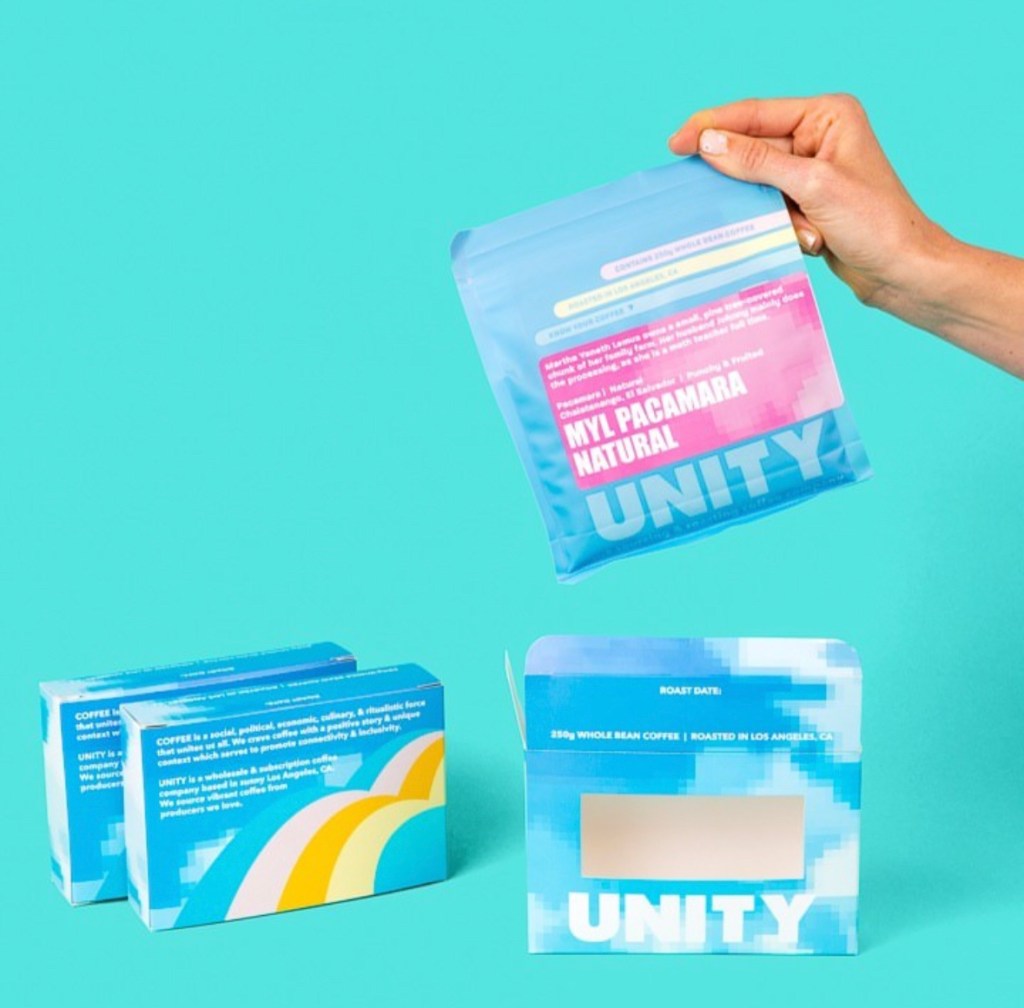
Third, we have what Elliot calls the “Sky’s the Limit” box. This is a fully custom window box that fits over the printed bag. It is very colourful and fun, with grainy rainbows turning into pixelated clouds. This design when through a lot of changes, and I kept pushing Elliot to level up the game, and he brought it. We wanted something unique, maybe even something that didn’t look like your typical coffee pack. It looks more like a VHS tape or other fun household item. Like I said, I am very serious about morals and ethics, so I need to balance it with silly and fun. These were both done with Grounded, which sources sustainable materials and provides an impact report.
Speaking of your coffee bags, could you share a bit more with our readers about your
philosophy/approach to roasting of the coffee that goes into those bags? What equipment do you roast on?
We generally roast as light as possible with as little development as possible, though we have a spectrum of roasts as a wholesaler. The most important thing is what green goes inside the roasting machine.
We roast on a Loring 35k and a Probat UG22. In general, we do blends on Loring because it goes for sweetness and balance and covers up imperfections in exchange for lack of complexity. In general, we do single origins on the Probat because you get much more complexity and ringing acidity in exchange for thinner body and potential over exposure of anything not beautiful about the coffee. Examples of this are Serious Black blend on Loring, Yinyini’s Natural Tabi on Probat. But we reverse that plenty of times. For exampe, Yensy’s washed Tabi is better on the Loring, and our biggest body, heaviest roast, Mezcal After Dark, is done on the Probat.


I noticed on your website that this past year you released your first Transparency Report. What motived you to release this? Why is transparency so important not only to you as a company, but to the greater specialty coffee community as a whole?
I have a lot to say about this, which most likely will be the opener of our 2023 report. This is the type of work we have always wanted to do, the reason why we started our own company. Ethics and Philosophy are paramount, and a transparency report is the best way to do that in a concise manner. I often repeat myself that it’s not about standing out from your competition, it’s about being a part of a group of aligned companies who want to do excellent and ethical work. That said, it’s no longer good enough to appear ethical with green washing and marketing terms. Put your numbers out there. Tell the story of your growers. Show your weaknesses and room for improvement. Be proud of your team and why your worth being an employer. Have clear values so a potential customer can make sure they are aligned before partnering with you.
It has been interesting seeing other transparency reports, showing some very refreshingly exciting and also heartbreakingly depressing results, Often within the same company’s report. I applaud all of my fellow coffee industry pros who have released a report, particularly those who display impressive metrics or those who share a desire to improve upon poor stats.
Part of our transparency report is more philosophy on roasting and data on how much we roasted on each.
So speaking of coffee, what are you drinking/enjoying right now?
Right now I am going back and forth between the fresh arrivals of Chalatenango (El Salvador) micro-lots (think wild anaerobic pacamaras and geshas) with QCing our heavier blends. We have been getting interest recently in darker roasted coffee and I want it to be incredible: sweet, clean, complex, big body, tons of balance, good with milk. Not my preferred cup of coffee but I am very excited to grow with our producers and introduce dark roasted customers to actual specialty coffee.

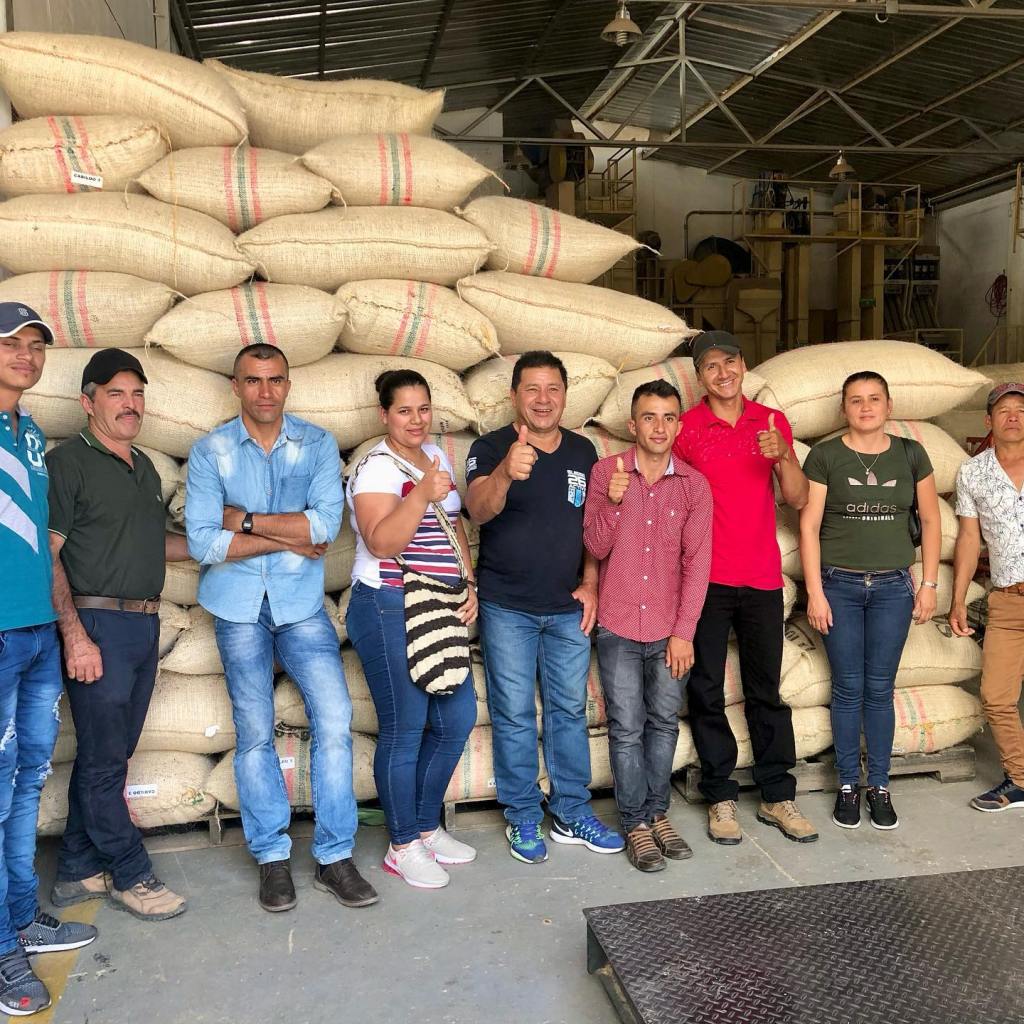
Your website does an incredible job at highlighting the various producers that you work with. Can you share a bit more about why you see this as so important that it merits a place on your homepage?
It’s that Obama meme, “That’s what I do, that’s what I do!”. We are a philosophy-led company, and our values are putting our producers front and center. It’s not so much about us, it’s about them. That’s part of the definition of specialty coffee. Otherwise, we could be buying lower quality nameless stuff and spinning it to make it seem ethical.
We chose the phrase “philosophy-led” because we don’t believe this is a “mission.” There’s a certain connotation when it comes to that word and working with international rural communities. We don’t have a “mission” to “better people’s lives” or that sort of thing. We have a philosophy which guides us. That is in our transparency report, but in short:
- Know your producer – the reason for your question.
- Pay more for female growers – they tend to be more marginalized and also tend to be greenwashed with very miniscule premiums paid.
- Put micro-lots in your blends: this drives up quality and prices to growers and makes you not a hypocrite
- Buy from the same producers year after year:
– this humanizes instead of commodifies our partners and makes the business sustainable for all connect with growers year round
– even if you travel to origin, try to have a more meaningful and less transactional relationship with your producer.
And to sum it all up: vibrant coffee from producers we love:
– this is two-pronged statement. high scoring, delicious specialty coffee, along with our sourcing ethos of identifying top growers who we can get to know over years of working together.
It’s been great getting the chance to connect up and share your story. Anything else you’d like to share with our readers?
We love connecting with coffee lovers who truly want the best of the earth. hit us up any time you want to talk coffee. we have a subscription at a few different tiers which showcase everything we’ve talked about here.
__________________________________________
Contact Info:
web: www.unity.coffee
instagram: @unity.coffee
facebook: facebook.com/unitysourcingandroasting
email: info@unity.coffee
Find their beans: If you’re looking to get your hands on some beans then definitely check out their web-store for what they’re currently roasting.
__________________________________________
I just want to say a huge thank you to Adam at Unity for being such a huge contributor to the coffee culture in Los Angeles. Check out their site, grab yourself some beans, and enjoy!
Stay Caffeinated,
Tyler
 commonly coffee